Cabin Air Filter VS Engine Air Filter

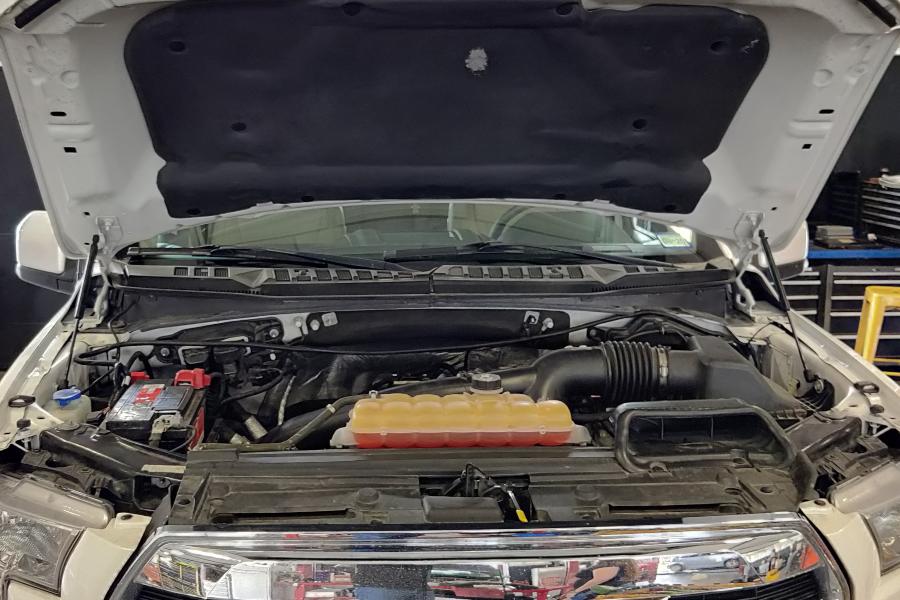
Under the hood view of a truck

If you have ever taken your car in for a tune-up or to get regular maintenance done, then you have more than likely been told that you should get at least one of your car’s filters changed. If you are a good car owner, then you probably went along with it and got them changed, but chances are that you did not really know what you were doing or why you needed new filters in the first place. If you didn’t change them, what would really happen? Would your car break down? Would you be able to breathe? There are two main filters in your car: the air filter and the engine filter. Below is a guide that explains what each is, their functions, and when you need to change them.

What is the Cabin Air Filter?

When you are inside your car and breathing naturally as all humans do, then you are breathing air that gets filtered through what is known as the cabin air filter. The cabin air filter traps all of the dust, pollutants, dirt, and other gross particles that get in the air and can harm you when you breathe. In essence, it makes sure that the air that you are inhaling is fresh. If you have a dirty cabin air filter, you will end up breathing in things like pollen, mold, bacteria, car smoke, dirt, dust mites, car chemicals, etc. It is absolutely vital to make sure your cabin air filter gets changed when recommended so that you stay healthy when you drive.

What is the Engine Air Filter?

In much the same way that you breathe, your car breathes as well. The air that goes through the engine gets filtered but instead of being filtered through the cabin, it goes through an engine air filter that is found in the engine itself. The same pollutants that can get into the cabin of your car such as pollen, road dust, dirt, chemicals from the exhaust, etc. can also get into the engine. If these dirty pollutants are allowed to get into your engine, it can build up and cause it to not be able to perform at its peak performance. Your engine needs clean air in order to operate the way it should which is why it is important to change it when it is time to do so.

When to Change the Cabin Air Filter

Your cabin air filter should be changed every 30,000 miles just as you change your oil. This will make sure that the air in your car is good quality and that the airflow, whether air or heat, flows significantly better. A new cabin air filter can make the air feel less stale or musty when the air is turned on.

When to Change the Engine Air Filter

Your engine air filter should also be changed every 30,000 miles. It can help you get more gas mileage, better your air-flow, and improve the way your engine is able to perform. It will help to protect your engine from wear and tear and keep you from having to pay for expensive, preventable, engine repairs down the road.

Is it time to change your cabin or engine air filter again? Visit Reliable Automotive, an auto repair shop with locations in San Marcos, Kyle, and Buda, TX, to get your filters changed today!
Cabin Air Filter VS Engine Air Filter

Your Guide to Your Vehicle’s Transmission

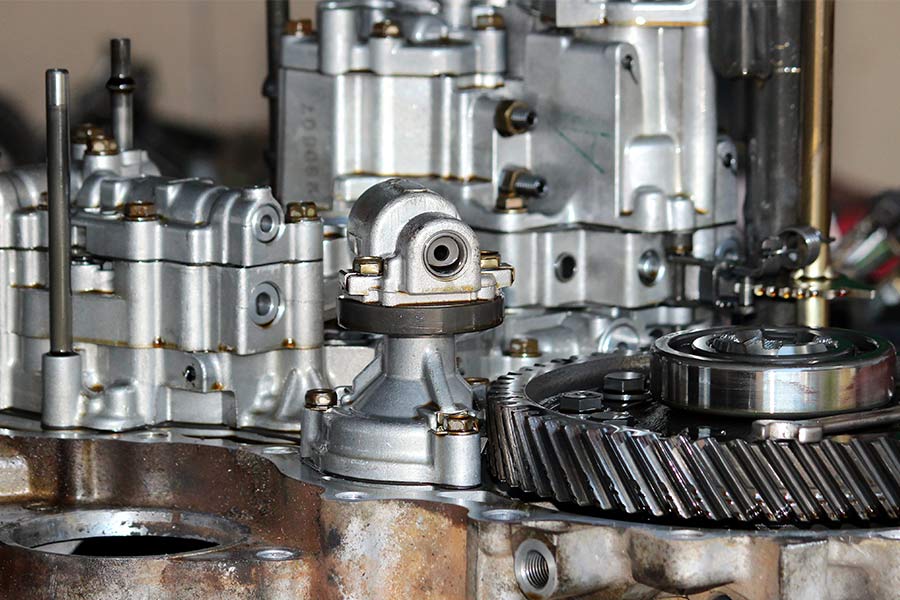
Close-up of a vehicle's transmission

The best way to compare your car’s transmission to another object with a similar purpose would be to think of how the skeleton of a human body works in general. Much like how the human skeleton keeps the human body moving, a transmission helps keep the car working as it should. Both objects also need to be taken care of, with the skeleton requiring calcium and exercise and the transmission needing maintenance regularly.

Basic Facts on Transmissions

The transmission works by making use of a gear ratio that has both the engine and drive wheels correlate as the speed changes. It’s mainly controlled by the clutch, which has both parts of the car disconnect when it’s moved around by the shift stick. This description best describes how manual transmissions work because automatic transmissions don’t exactly function like them. In comparison, automatic transmissions make use of a torque converter installed that doesn’t require its driver to change gears because it already knows when a vehicle is accelerating or slowing down.

What to do With Transmission Fluid

This is mainly recommended for any car owners that know how to check on their transmissions without a problem, so to speak. First, you should search for the fluid dipstick on the engine and see if it’s covered in the substance when it’s removed. Then wipe it away if it’s entirely covered and see how far it reached to the indicator. Finally, insert it into the transmission before removing it and determining if it’s good or not. This should mainly be done when your car reaches a specific amount of miles, though that will vary depending on the manufacturer’s vehicles. To add transmission fluid, simply have the dipstick removed and slowly pour it into the engine. There are other pieces of info to take note of regarding transmission fluid:

  • The color of transmission fluid starts as pink or red before it starts to get darker due to use or color fade, though it also depends on the brand used to make the color.
  • Each car model has its own transmission fluid specifications, and using the wrong one will affect your warranty
  • Mixing transmission fluids is strictly prohibited; it’s better to stick with what comes in a single purchase of fluid.
  • Your fluid may need to be checked on more often if your vehicle continuously accelerates or is in constant traffic.
  • Pouring too much transmission fluid can mess up a vehicle’s engine, so be sure to take your time with the fluid while checking on how far it reaches to the indicator.

How Do Mechanics Check Your Vehicle’s Transmission?

If you’re not entirely comfortable with checking on your car’s transmission, it’s probably best to leave it to the mechanics instead. Their diagnostic services will determine what’s causing a specific problem in the transmission by running a fair number of tests. Aside from checking over the condition of the fluid, they also check on the performance of your vehicle as well as have its controls looked over while it’s on a lift. Additionally, they can use their computers to better pinpoint what needs to be fixed, which helps in preventing human error in the long run.

Your Guide to Your Vehicle’s Transmission

Why Your Vehicle’s Suspension Matters

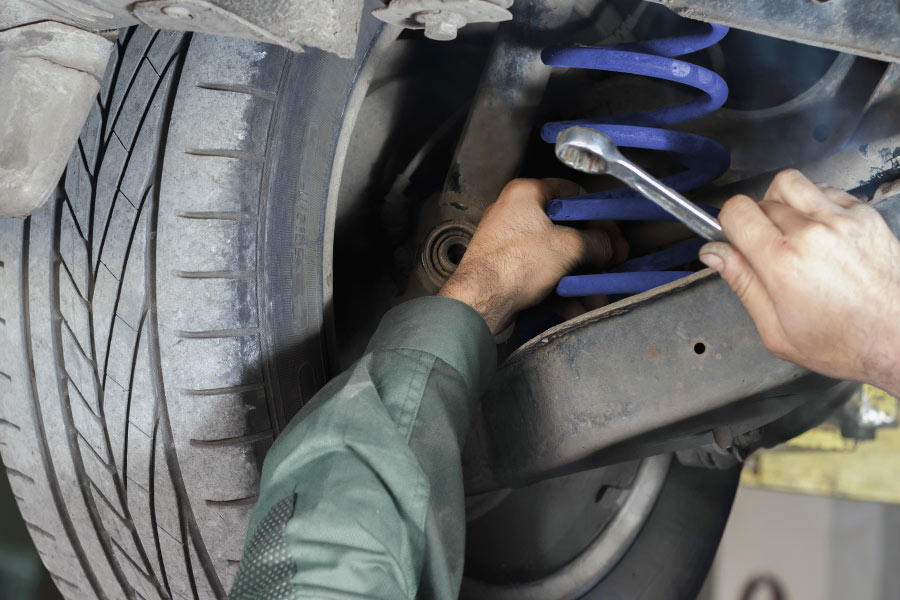
Mechanic adjusting a car suspension

According to mechanics, if there’s one area that people are most confused about in their cars, it’s the suspension system. Car owners generally only know that shock absorbers are supposed to smooth out the ride. Here we discuss how a vehicle’s suspension works and why it’s important.

Your car’s suspension system is essentially designed to maximize the friction between the tires on the road and the body of the vehicle in order to provide better control and handling of the vehicle and to ensure the comfort of the driver and passengers.

How It All Works

The purposes of the suspension system is to handle all the up and down forces of the tires as a vehicle turns corners or hits bumps. This allows you to not only have better control of the vehicle but also to avoid severe bouncing on the driver and the passengers.

There are many parts of the suspension such as the springs, the dampers, the shock absorbers, the suspension system and anti-sway bars for example. They each work together to keep your tires solidly in touch with the pavement, and to control the counter-forces that occur while driving.

One thing to consider is that certain parts of your suspension system like the ball joints, the shock absorbers and the struts don’t last forever. Manufacturers might have you believe that you may get 50,000 miles on a set of shocks, but it would be smart to have them inspected shortly before the 36,000-mile mark since many car warranties end shortly thereafter.

Why It’s Important

Imagine if your vehicle was traveling 70 miles an hour, and then out of nowhere a huge block of wood was right in front of you. You swerve, but one wheel goes substantially over the wood. Without a suspension system, you might have a severe rollover effect.

Not only do you want to avoid accidents due to a poor suspension system, but if the money is coming out of your pocket, it can get expensive. Expect to pay $450-$900 for a pair of replacement structs, and $250 to $580 to replace a pair of shock absorbers.

Five things you can do to check your suspension include:

#1. Pay attention to whether the drive seems rougher.

This, of course, can be because of bad roads, but if general the road seems rougher almost everywhere, you may have a problem with your suspension.

Also listen for noticeable squeaks as you drive.

#2. Pay careful attention to how your vehicle turns

If you feel like as your vehicle turns your car or truck is fighting you, the chances are great your suspension needs to be checked.

#3. Inspect the wear of your tire tread

Your tires should wear evenly and if they don’t, there is likely a problem with your vehicle’s camber. the angle your wheel sits in relationship to the road.

#4. Brake sharply and watch your hood.

If your hood dips as you brake, you may have a suspension problem.

#5. Look to see if your car looks level

Your car shouldn’t sag anywhere but should be level in both the front and back

It’s so essential to keep your suspension system operating properly that the alternative, either a complete suspension replacement or a major accident makes the fees involved seem quite reasonable.

Why Your Vehicle’s Suspension Matters

What is a Car Diagnostic Test?

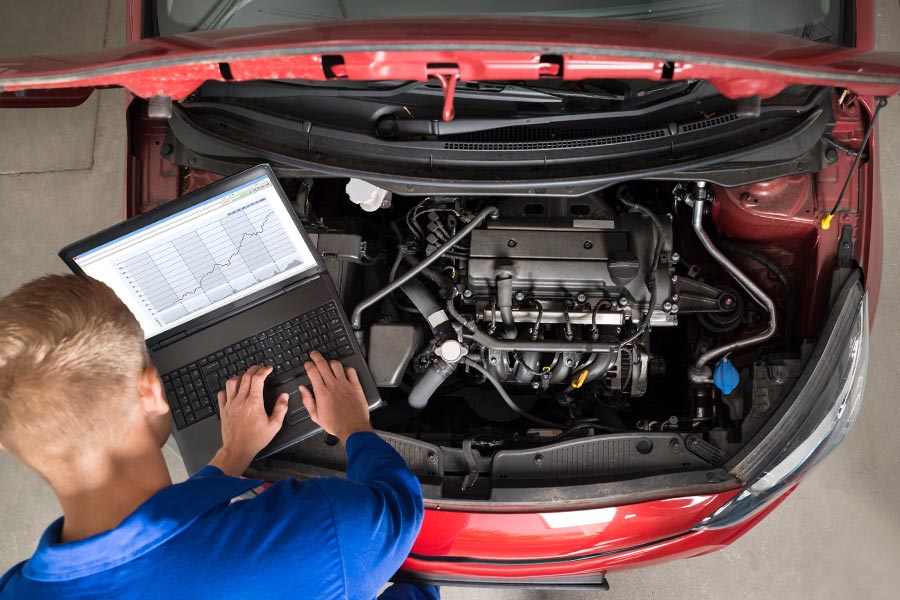
Man performing a car diagnostic test

There are plenty of reasons to be thankful your car has an on-Board Diagnostic system(OBD). The invention and innovation of the OBD system allows cars to perform more efficiently and cuts back on much carbon is released from a car. Not all car owners will be worried about the efficiency of a car or how much carbon their car is emitting but every car owner wants to keep their investment running. With your cars OBD system, keeping your car running is much easier for you and your mechanic.

How does a Car Diagnostic test work

In the past, it was impossible for car manufacturers to create a system that could manage and keep track of multiple parts of a vehicle. Since 1996 all New vehicles have been required to use OBD-II(The latest standard and specification for car OBD systems) There can be more than a dozen different sensors on your vehicle, these sensors are constantly feeding this information to different ECUs(Electronic control units) throughout your car. This system as a whole is called the Controller Area Network bus(CANbus). It allows all systems on your car to constantly be connected, similar to how you can share a folder between multiple computers. A mechanic can access and sometimes make changes to this information by using a scanner tool.

What problems can a Car Diagnostic test find

While generally, a diagnostic test will not tell a mechanic exactly what is wrong with your vehicle, the test can help narrow down where the problem can be found. using a scanner tool a mechanic may receive a code from any of the following electronic control units.

  • Engine Control Module(ECM)
    The ECM monitors sensors in the engine bay to ensure your vehicle is receiving the correct air-fuel mixture and regulates the emission control system. The ECM uses sensors to control things like the timing of spark plugs firing, the timing and amount of fuel released into each cylinder, oxygen to fuel ratio around the exhaust to detect problems.
  • Transmission control Module TCM
    The TCM uses information from the ECM and Transmission Control Unit(TCU) to decide when the transmission needs to shift. The TCM can even take information from the throttle body and traction control system to reduce things like wheel spin. Traditional manual vehicles do not have a TCM.
  • Powertrain Control Module(PCM)
    The PCM usually contains the ECM and TCM in a single unit. By having the ECM and TCM in a single unit it allows for better coordination between the two systems, which can allow for smoother shifting or better fuel economy.
  • Electronic Brake Control Module (EBCM)
    The EBCM controls and monitors the antilock braking system(ABS). The EBCM uses information like wheel speed and other braking system sensors to activate the ABS when it is needed.
  • Body Control Module (BCM)
    The BCM controls and monitors various electronic accessories in your vehicle. This includes things like lights, door locks, mirrors, and air-conditioning.

When to take your car in for a Diagnostic Test

Anytime your car is throwing a trouble code or potentially showing signs of having an issue you should take your car in for a diagnostic test but you can also take your car in annually to be tested. Taking your car in annually for a diagnostic test can help you avoid major repair bills by resolving small problems before they become big issues.

What is a Car Diagnostic Test?

Your Guide to Tire Alignment

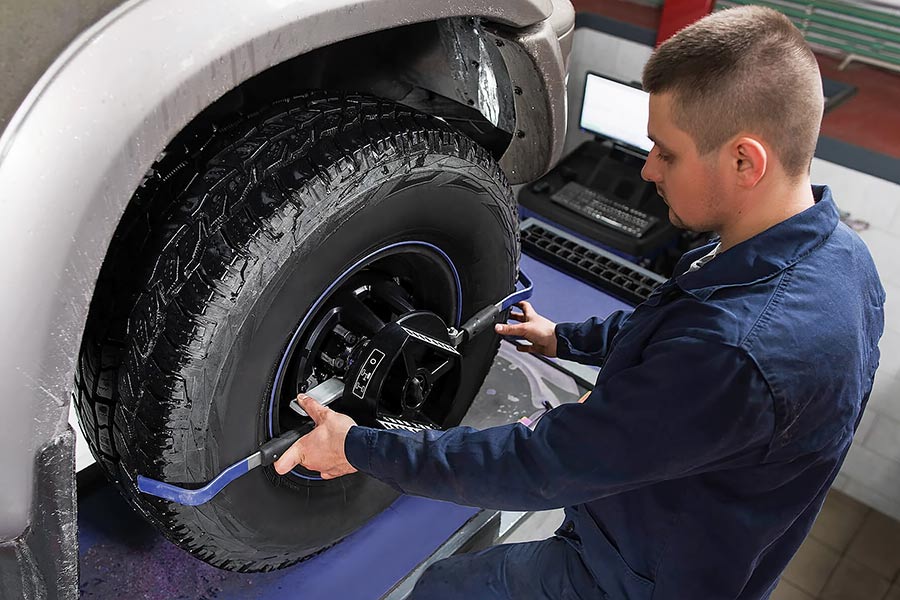
Man Aligning a Tire

You should always have your tires aligned. Don’t wait until it’s too late. Sometimes, drivers wait until their car is vibrating on the road, pulling in the opposite driving direction, or their tires are being destroyed long before they should wear and tear. Your tires should last three to four years, so make sure you get your money’s worth. It would be a shame to need new tires before you actually do, because all you really need is a tire alignment.

What to Expect

During a tire alignment, the mechanic will adjust the suspension. Against contrary thought that the actual wheels are being adjusted themselves, all the mechanic has to do is fix the angles at which all of the tires touch the surface you are driving on. Without the proper angle, steering can become difficult and sometimes altogether inaccurate. Once the suspension of the vehicle is adjusted, the vehicle can proceed to drive forward, left, or right, depending on the steering motion.

Although you should be cautious, this information is not to scare you. There are ways to know you should have your tires aligned. Today, most drivers are on a budget and look to save as much money as possible. To do so, unnecessary mechanical fixes are something to avoid. So, pay attention and you will learn the warning signs of a tire alignment that needs fixing. Also, please do not use this information as a means of certification. It is always recommended to get a licensed professional to take a look at your car, at a time of uncertainty about your vehicle’s condition.

When to Get Your Tires Aligned

If you notice that your tires are not receiving the wear and tear from the road at an evenly distributed pace, this may be a sign your car needs to have a tire alignment. With the proper alignment, your vehicle’s tires will wear and tear evenly, and they can usually be replaced at the same time. To avoid having to replace one tire before the others, pay attention to the wear and tear on your tires. If you notice one or more tires are not in as good condition as the others, it may be time for you to have a professional take a look at your vehicle to see if you need a tire alignment.

If you are driving on a straight path and notice that your vehicle is pulling to the left or right instead of going forward, this may be another sign that your vehicle might need a tire alignment. Drive with extreme caution and do not panic. With the proper alignment, your vehicle should always we going straight and not pulling to the left or right.

If you are steering your vehicle straight and notice that the steering wheel is off center, then it may be time for you to have a professional take a look at your vehicle to see if it needs a tire alignment. Your steering wheel should always be centered, so this is a red flag in any scenario, while driving.

Also, if you ever feel your steering wheel vibrating as you drive, then this is another red flag that you should have a professional look at your vehicle. Your vehicle’s steering wheel should not be vibrating, and the proper wheel alignment will prohibit this from happening.

Your Guide to Tire Alignment

How to Check Your Cars Fuses

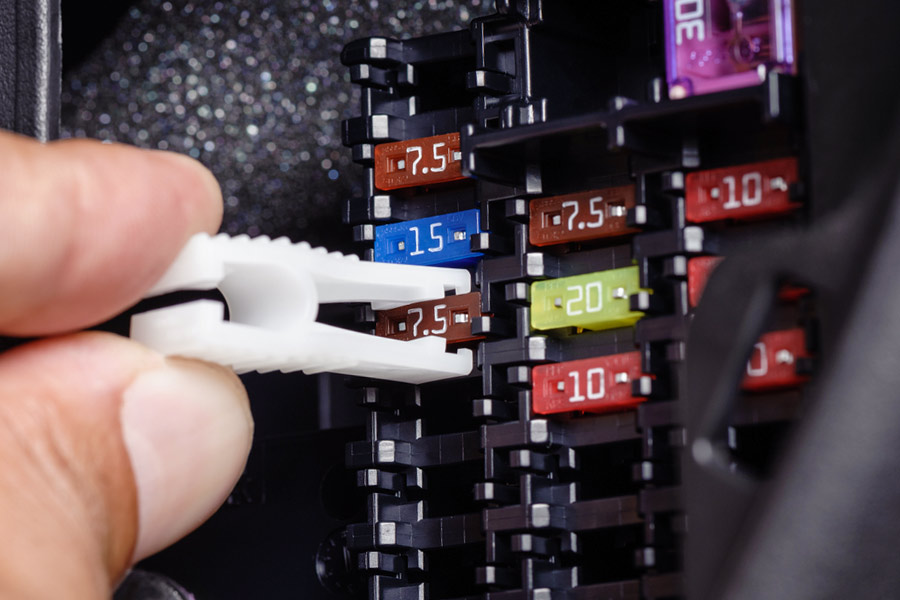
Car Fuses

The fuses in the car can overheat or meltdown leading to additional issues. If one small fuse is blown this can cause a lot of problems and the car may not run until the fuse is replaced. These are some tips for checking the fuses to determine which fuse may no longer be working.

How to Check the Fuses

The fuse blocks are often located on the front driver’s side of the car. They may also be in the kick panel on a truck. Use the owner’s manual to locate the fuse box. Use the owner’s manual to look at the different fuses to try to determine which one is causing the issue. The manual will explain what the different fuses are used for and what they operate. There are some ways to check and see if the fuse is blown.

Multimeter

A multimeter is a digital unit that can be used to check the fuses. It will be able to tell a person is the fuse has gone bad and if it needs to be replaced. This device can be found at the local automotive parts store.

Voltage

The DMM can be used to measure the voltage of a fuse to determine if it is still working. The DMM should be set to 12 V and then connect to the battery negative terminal. The positive side should be put on the fuse in question. If the fuse is good it will have a measurement of 12V or 13.5 if the engine of the car is running. If the fuse is bad it will have a zero reading on either side.

Voltage Drop

This is another test to determine if the fuse is good. Both positive and negative probes can be used. A good fuse will have a reading of 0V with no drop. A fuse that is no longer good will have a rating of 12V and there will be a full drop. This means no voltage is available for the fuse.

Continuity

The fuse should be removed from the fuse box and each end should be examined for continuity. A good fuse will have a measure near 0 and the bad fuse will show 0L.

Test Light

An LED test light is an easy way for a person to check a fuse. The light’s clips are connected to the power and the ground or the battery terminal. Each side of the fuse is then probed. A good fuse will show a power reading which will turn the light red. If the fuse is no longer good only one side will show the power and the other will showground. A green light will turn on the device.

These are some ways that a person can test the fuses in their car to see if they are blown. A blown fuse needs to be replaced so a person can continue to operate their car.

How to Check Your Cars Fuses

Extending The Life Of Your Brakes

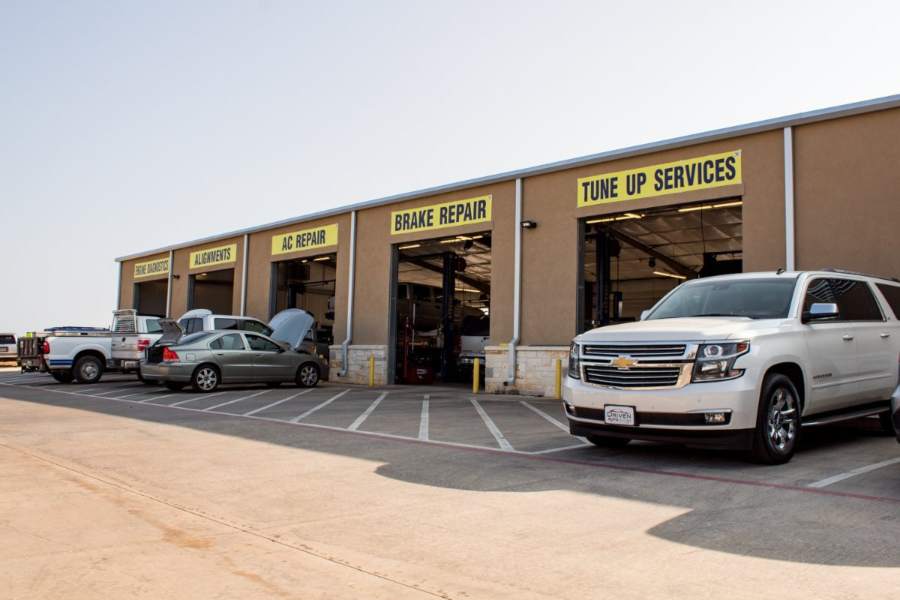
Front of auto shop in Buda Texas

Brake repairs can be costly, but your brakes are an important part of safe driving. Luckily, you can take action to help your brakes last longer today, whether at home or on the road.

Take Your Time

Higher speeds increase brake activity, which can cause early wear on them over time. When you drive, try to maintain a lower speed so that your brakes don’t have to work as hard to stop the vehicle. Remember, if you don’t get to a high speed, then you won’t have to press your brakes hard trying to get back down to a lower, normal speed. Keeping this in mind while driving can help you pay more attention to how you use your brakes.

Drive with One Foot

Most drivers only use one foot for the pedals when driving an automatic. However, many aren’t aware of just how important it is to not hit the gas and brakes simultaneously. Your brakes have to work against the forward motion of your vehicle, so hitting your accelerator and brakes together causes both to be overworked. This is detrimental for not only your brakes, but for your acceleration as well.

Go with the Flow

Instead of speeding up to the closest car, try to maintain the perfect distance. If you maintain the perfect distance, then you won’t have to pressure your brakes at all. Not having to press your brakes at all will increase the amount of time they can stay on your vehicle. Soon, you will become very experienced in these practices and save a lot of money over time. Envision the traffic flow and go with it.

Watch Out for Other Cars

Keep an eye out for other vehicles that are stopped or driving slowly ahead of you. If you can spot slow or stopped vehicles soon enough, you can either adjust your speed slowly, instead of slamming your brakes, or move to another lane of traffic if necessary so you don’t have to brake hard. Giving yourself the chance to slowly decelerate or move around a slowed vehicle will be less harsh on your brakes than having to stop quickly.

Slow Instead of Pumping Your Brakes

Instead of pressing your brakes hard, just coast, reach a lower speed, and then press your brakes (if you absolutely need to). A lot of times, you won’t even need to use your brakes, because at a lower speed, you tend to be able to continue driving with the flow of traffic.

Better for Your Brakes

Brakes can usually last over 125,000 kilometers. Driving mindfully can help keep your brakes from experiencing too much wear and tear before their natural lifespan ends. Additionally, driving with careful use of your brakes will feel better than hitting the brakes hard often. You ride will feel smoother, safer, and will be better for your vehicle and passengers.

Not sure if your brakes are still as healthy as they should be? Contact Reliable Automotive, an auto repair shop with locations in Buda, Kyle, and San Marcos, TX, to make an appointment to get them checked.

Extending The Life Of Your Brakes

How To Remove Ice From Your Vehicle’s Windshield

Vehicle receiving auto repair in San Marcos Texas

Winter’s harsh temperatures and wet conditions can present many challenges for vehicle owners, and some of those challenges must be overcome before even leaving the driveway. One such challenge is an iced-over windshield. A windshield that is covered with a sheet of ice renders a vehicle inoperable, simply due to the fact that the driver will be unable to see – and leaning out of an open window peering around side mirrors is a dangerous maneuver that should never be considered remotely safe.

So what do you do? When you come out on a cold winter morning to find a layer of ice over your windshield, it can be tempting to attack with a scraper to make a spot big enough for bare-minimum visibility. But between the stress of trying to remove ice under a time crunch, and questionable road conditions potentially making your already-dangerous commute even worse, it’s better to be prepared for the possibility of an iced-over windshield with the following tips.

Icy Windshield Prevention

As the old saying goes, an ounce of prevention can add up to a pound of cure. This definitely applies to icy windshields. The easiest method to prevent snow or sleet from glazing over your vehicle windows is to cover all glass with tarps or thick sheets (tuck ends inside closed windows and/or vehicle doors). While this method may be a bit time-consuming and unwieldy, for small amounts of precipitation this option almost always works – simply head out to your vehicle a few minutes earlier the next morning in order to have time to remove the coverings.

Another option that works well in conjunction with coverings is to spray down your windshield and windows with sprays that prevent water from sticking and ice from developing. Commercial sprays are always available in automotive departments and at automotive shops, but you can also make your own mixture of one part distilled water mixed with three parts white vinegar. However, it’s important to keep in mind that prolonged exposure to the vehicle can result in damage to protective wax coatings – so deploy these sprays with care, and consider having a rag on hand to wipe down adjacent painted surfaces.

Safe Removal of Ice From a Windshield

If ice is already frozen onto your windshield, then clearly tarps and vinegar-based sprays aren’t going to be of any help to you. Know that using your body weight (and frustrations) to chip away at ice can potentially put spiderweb chips and cracks into your glass. This risk is heightened if you attempt to use hot water to speed-melt ice.

The best method for removing ice from your vehicle’s windshield is to work from the inside out: set your vehicle’s defroster to the max to get the windshield warmed up from the inside. From the outside, use a safe de-icer made up of one part water and two parts isopropyl alcohol (rubbing alcohol) with a few drops of standard dish soap. Spray this mixture on an iced-over windshield to help thin and loosen ice. Then you can safely use an ice scraper to go at the ice, taking care to apply pressure – but not too much – evenly as you go. Start from the edges and work your way in.

By taking the time to use preventative and safe removal measures, you will be able to safely and relatively quickly remove ice from your windshield and other windows without causing any damage to the expensive glass underneath. Need more tips for keeping your vehicle in good condition this winter? Contact Reliable Automotive, a Buda auto repair shop, to talk to a professional who can help.

How To Remove Ice From Your Vehicle’s Windshield

What’s Causing Your Heater to Fail?

Car heater

There is one problem that no one wants to be surprised by on a frigid morning, a broken car heater. What causes them to fail, how to fix them, and how to prevent them from breaking down? Well, heating units in cars function much the same as a home furnace system, but on a smaller scale. Since the heater in a car has a lighter workload than the heating system in a home, it is much less robust and will require more maintenance. However, since they are based on the same design, it is easy to find solutions when they run awry. Here are some common problems associated with automotive heating systems and some solutions to prevent failure and malfunction.

  • Thermostat Issues.
  • Filtration Issues.
  • Electrical Issues.
  • Mechanical Issues.

Thermostat Issues

The first point of failure for an automotive heating system is something that is often overlooked, the temperature control. Almost every car today is controlled by an electronic thermostat, transmitting a chosen temperature setting into the electrical signals to produce heat and pump it into the car’s cabin. What is a simple action for the owner of a car to just turn a dial for hot air to come out, is actually a complex electronic and mechanical interaction. Although, the thermostat will usually outlast the mechanical parts of the actual heating unit, it cannot be overlooked when troubleshooting the system. The easiest way to diagnose potential thermostat problems would be having it looked at by a professional. There simply is no easy way to see if it is the problem.

Filtration Issues

Another often overlooked aspect of the heating system are the filters. As the system works to heat and cycle air, there are constantly dust particles being deposited on its filters and airways. Over time, these reduce air flow through the system, putting excess strain on the motors and valves. If left unchecked, particulate build up can cause the heater’s motors to burn out, or cause valves and pipes to fail. Luckily, filtration issues are the easiest to prevent. All that needs to be done is implement a regular cleaning schedule on the heaters filters. However, if a clogged system causes motors to burn out, valves to fail, or seals to break, the best solution is contacting a professional.

Electrical Issues

A car heating system today is not only controlled by electrical components(thermostat controller), but is also regulated internally by a small computer. As with any computerized system, problems can arise by no fault of the operator. Sometimes, circuits burn out, causing the system to malfunction or fail to work altogether. Unfortunately, the only thing to solve this issue is contacting an expert.

Mechanical Issues

There are many moving parts that come together to produce heat in an automobile. Essentially, coolant heated by the engine is brought into pipes that heat up the air which is blown into the car. The process is a lot more complex than that in practice, but there are dozens of places where parts can wear out, causing the system to fail. Regular maintenance is the best way to prevent your heater from breaking.

To recap, the heater in a car is much like a heating system in a home but on a smaller scale. With proactive maintenance and regular cleaning, it will work for years and years.

What’s Causing Your Heater to Fail?

Signs of Bad Windshield Wipers

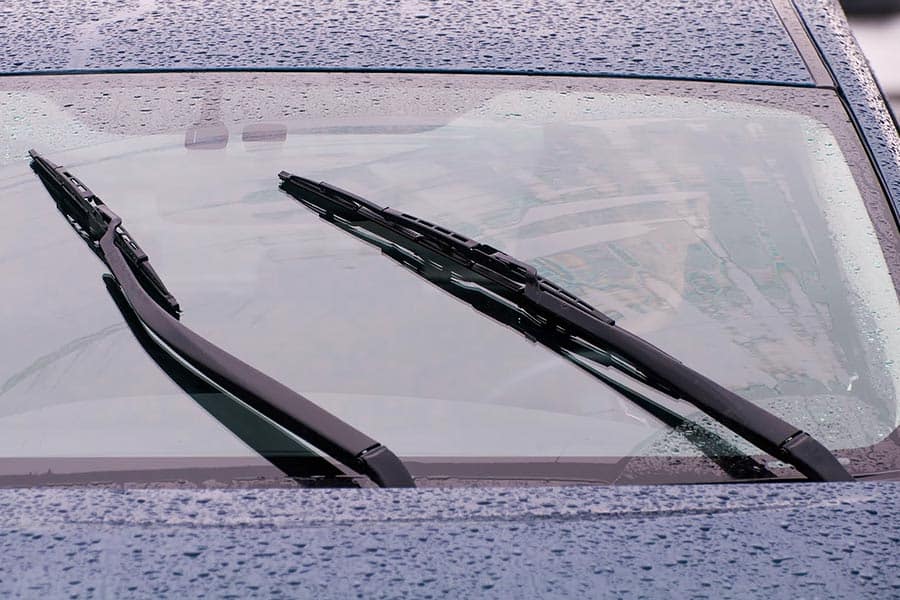
Windshield wipers on car

Windshield wipers might seem like an insignificant aspect of your vehicle, but they play a crucial role in your safety and your car’s drivability. Mainly, your windshield wipers will directly affect your visibility which is one of the most essential factors in safe driving. Odds are, if your windshield wipers are not performing properly, you will notice a few obvious symptoms. However, in case you are not sure about what to look for, here are some signs that you may want to replace your windshield wipers to ensure safety every time you get behind the wheel.

Squeaking or Scratching Noise

If you hear a squeaking noise as your windshield wipers go across the glass, you should consider replacing the wiper blades. It is likely that the material the wiper blades are made of (probably either rubber, silicone, or graphite) has started to go bad by hardening. This will only get worse over time as the wiper blades become less and less effective. Replacing them early on when you first notice this is the wisest option, that way you don’t accidentally get stuck in a storm with bad blades that you could have replaced earlier.

Bad Contact with Windshield

There are several different reasons that your wipers are not making contact with the entire windshield, and you will start to notice that your wipers are not catching all the water that they should reach. For instance, if there is a gap in the middle of your windshield where the water doesn’t get wiped away, you know that there is an issue. This is likely due to either a bent frame or bad blades, so you might want to take a closer look before replacing either to save yourself some trouble and unnecessary repair costs.

Cracked Blades

Your wiper blades are very susceptible to wear and tear, and depending on the climate of where you typically drive your vehicle, your wiper blades might wear out faster than others. The blades on your wipers can become cracked or even broken off in some places, and when you notice this happening, it is time to replace them! In order for your windshield wipers to work effectively, the blades need to be firm with a solid straight line. Once those blades are compromised, they will not be able to function as they should, costing you visibility while on the road.

Streaks on your Windshield

When you use your windshield wipers, they should remove all the residue on the glass. If you start to notice streaks in the wake of your wiper blades, or if your windshield seems to have a film-like substance built up, this is likely an issue with your blades. It is possible that your blades just need to cleaned off which can be done with a paper towel. When you are messing with the wipers, be mindful of how you are handling the frames! If you are not careful, they can easily become bent which will cause bad contact with your windshield. If after cleaning the blades, you still notice streaks, you will want to have them replaced altogether so that your windshield stays clean and your visibility stays unobstructed!

Signs of Bad Windshield Wipers